“oh, can you send all the RAW files too?”
RAW files – conventionally capitalised – are the actual raw data files captured by a camera. They are ‘uncompressed’; so that data exists for each pixel, as opposed to ‘compressed’ formats like JPG where an algorithm reduces the storage space required by taking some shortcuts in how the image is held in memory. They have a much greater ‘bit depth’ – meaning that the colour palette they can use is much greater than a JPG. They are also uncropped: you get every pixel that the camera captured.
So, why wouldn’t you want them? Why wouldn’t we send them?
I have moved my position on this over time: I used to say “oh, sure, why not” and bung them on a drive or dropbox. Now I don’t.
Let’s tell some stories that may help to shed a little light on the subject.
– The party’s too hot. Bad aircon design, or whatever, but the revellers are dripping with sweat. It’s not a great look. So I tone it down in the edit; healthy glow replaces hot-and-bothered. Everyone looks fabulous.
– The elderly speaker is probably doing his last public appearance. He’s over 90, looks after himself as best he can, but the tight shots that show his charisma and wisdom also show a fair bit of dandruff on his lapel. Dignity trumps most things, for me, so it vanishes in the edit.
– AV problems mean the stage laptop now has to be connected via a long, looping cable. The production values are high, so the client asks if I can just make that cable disappear. I do.
– During the shoot, the subject breaks down in tears. A particular feature has traumatised them since childhood. This photoshoot is pure hell. We talk about a small fix that will strike a balance between an authentic representation, and their trauma. In the edit I apply this fix to all their photos. This stays between us; it’s not something the client needs to, or should, know.
– An event with a high proportion of delegates in sensitive occupations uses (discreet) lanyard coding to indicate who doesn’t want to (or absolutely can’t) appear in the photos. We do our best to spot them in-event, but in the edit, I find a few more, so I crop or darken them out.
– The lighting budget isn’t… well, there isn’t a lighting budget. The speaker, in front of a big presentation screen, has almost no light falling on their face. I can still make it work, but only by digging deep into my technical expertise, shooting a dark photo which I know can be manipulated afterwards in a highly specific way to give a pleasing result.
– The set design uses a giant dot-based LED screen. It doesn’t play nicely with a pixel-based camera, and the editing workarounds to minimise ugliness are complex, but I do them. The results are great.
All of these examples have happened in the past couple of years. And plenty more like them.
Imagine being in any or all of these situations, and having a client saying: “yeah, just send everything unedited too. I need them because Reasons.” (For bonus points, they might ask for the entire camera card, including all the motor-burst shots where the speaker’s face looked awful mid-sentence. Dignity? What dignity?)
The Reasons usually refer back to what I said above: possible concerns over compression, resolution, flexibility in re-edit, or whatever. They aren’t nonsense; but they aren’t that real, either.
But they paid for those files! They paid for my time! They own them!
And this is where things can get difficult.
At the heart of the matter now is some pretty fundamental stuff about photography, intention, and what both the client and I am doing here at all.
It requires some philosophical standpoints about what professional photography is all about.
Let me offer you one:
My product is a service that uses the medium of photography to achieve my client’s objectives. As part of that service, I use experience, planning, equipment, shooting technique and post-shoot editing and processing. Those components form an indivisible whole. We define the required outcome (including any particular constraints relating to usage or medium) and I achieve that outcome.
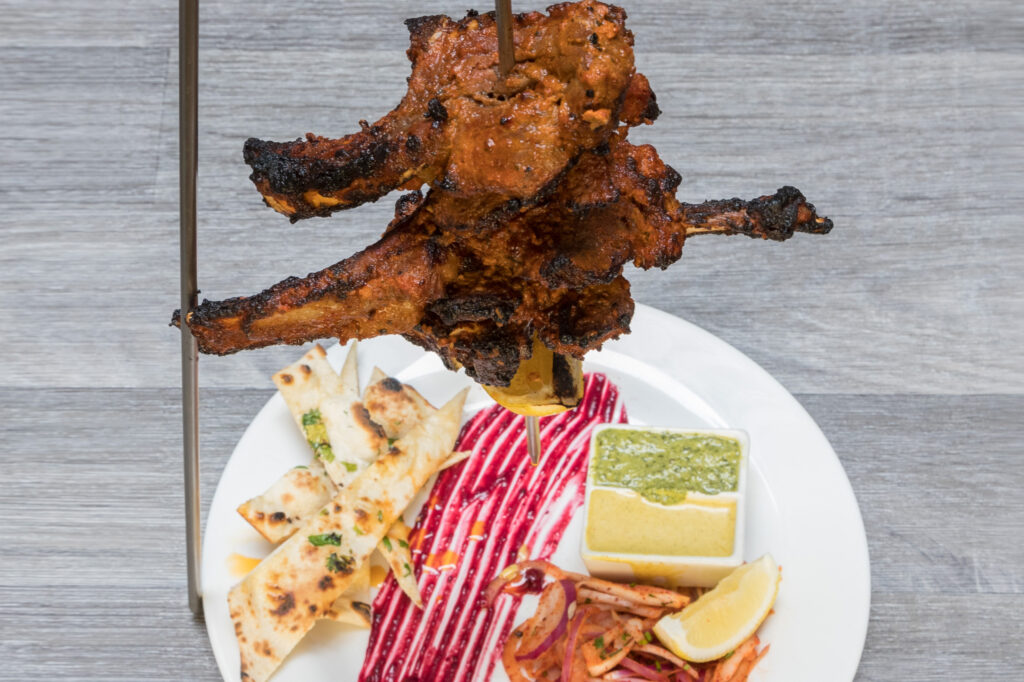
Analogies can be clumsy, but you don’t trot into Michel Roux’s kitchen, grab a couple of the lamb chops you’ve ordered and take them home uncooked because you might fancy them later in a curry. This doesn’t touch the bunch of issues in my anecdotes above, but does indicate that you are transacting for the service of a great dinner, not bits of raw sheep.
I’ve talked a lot here about the role of the edit: how it is mediating in some way the ‘truth’ of the imagery. I have news for you: other than in the highly specific case of journalism, where press photographers must not manipulate or intervene in the ways I’ve mentioned, this is how photography works. From vision to execution to processing, it’s a continuum.
So now it’s a no.
For one thing, there’s a courtesy point here: if you think you can edit the photos better than the photographer you’ve booked (who will be making many technical decisions as they shoot-for-the-edit), you’ve booked the wrong photographer.
If you don’t think you’ll be able to use the output for your intended needs, refine your brief. There are uncompressed delivery formats; there are high-bit-depth modes; resolution these days can be achieved to match any reproduction medium known to exist.
And if you’re not experienced in handling 100GB of data to review 5,000 images, trust me, you want an expert to have done that. It’s just one of the reasons you’ve gone to a professional in the first place: to exercise that judgement and decision-making.
Or just go back and see those mini-stories above from the perspective of the creative.